

In today’s digital age, social media has become a critical tool in digital strategy for businesses to connect with their audience, build brand awareness, and drive engagement. With so many different social media platforms available, marketers face a significant challenge in creating content that resonates with their target audience across each platform. Two strategies that are commonly used are repurposing social content and tailoring it by platform. While both strategies have their advantages and disadvantages, there’s no one-size-fits-all answer. In this blog, we’ll explore the pros and cons of each approach to help you decide which is best for your brand.

Repurposing Social Content
Repurposing social content is the process of taking content that has been created for one platform and using it on another platform. For example, you might take a blog post and turn it into a video or a series of social media posts. The main advantage of repurposing content is that it saves time and resources. Instead of creating new content for each platform, you can reuse existing content, which can be especially helpful for smaller businesses with limited budgets.
Additionally, repurposing content ensures consistency across all platforms. For example, if a company has a brand message that they want to convey, repurposing content allows them to communicate that message in the same way across all social media platforms. This consistency helps to build brand recognition and trust with the audience.
However, there are also some disadvantages to repurposing content. For one, it can come across as lazy or uninspired to your audience if they see the same content across all of your platforms. Additionally, different platforms have different rules and best practices, and repurposing content can sometimes result in a less-than-ideal user experience. For example, each platform requires different image sizes and word counts — plus, audiences vary across platforms. On LinkedIn, posting a letter from the CEO would perform exceptionally well, but on Instagram, it would probably fail.
Tailoring by Platform
Tailoring content by platform means creating content that is specifically designed for each platform. For example, you might create short, snackable videos for TikTok, high-quality images for Instagram, and longer-form content for LinkedIn. The main advantage of tailoring content by the platform is that it allows you to optimize the user experience for each platform, which can lead to better engagement and higher conversion rates.
However, tailoring content by platform can also be time-consuming and resource-intensive. It requires a deep understanding of each platform and its users, as well as a commitment to creating unique content for each platform. Additionally, some businesses may not have the resources to create high-quality content for each platform.
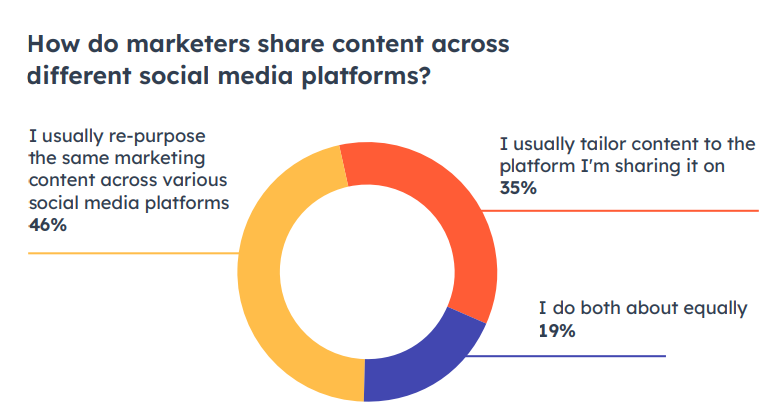
Source – HubSpot
Which is Better?
So, which approach is better for your brand: repurposing social content or tailoring by platform? The answer depends on your brand’s specific goals, resources, and target audience. If you’re a small business with limited resources, repurposing content may be the best approach. By repurposing content, you can create a consistent brand message across all platforms while still saving time and resources.
However, if your brand has the resources and is looking to maximize engagement and reach on each platform, tailoring content by the platform may be the best approach. By tailoring content, you can speak directly to your audience on each platform in a way that resonates with them most, increasing engagement and driving conversions.
Ultimately, the key is to find the right balance between repurposing content and tailoring it to each platform. By leveraging the strengths of each approach, you can create a social media strategy that resonates with your audience and helps you achieve your marketing goals.


